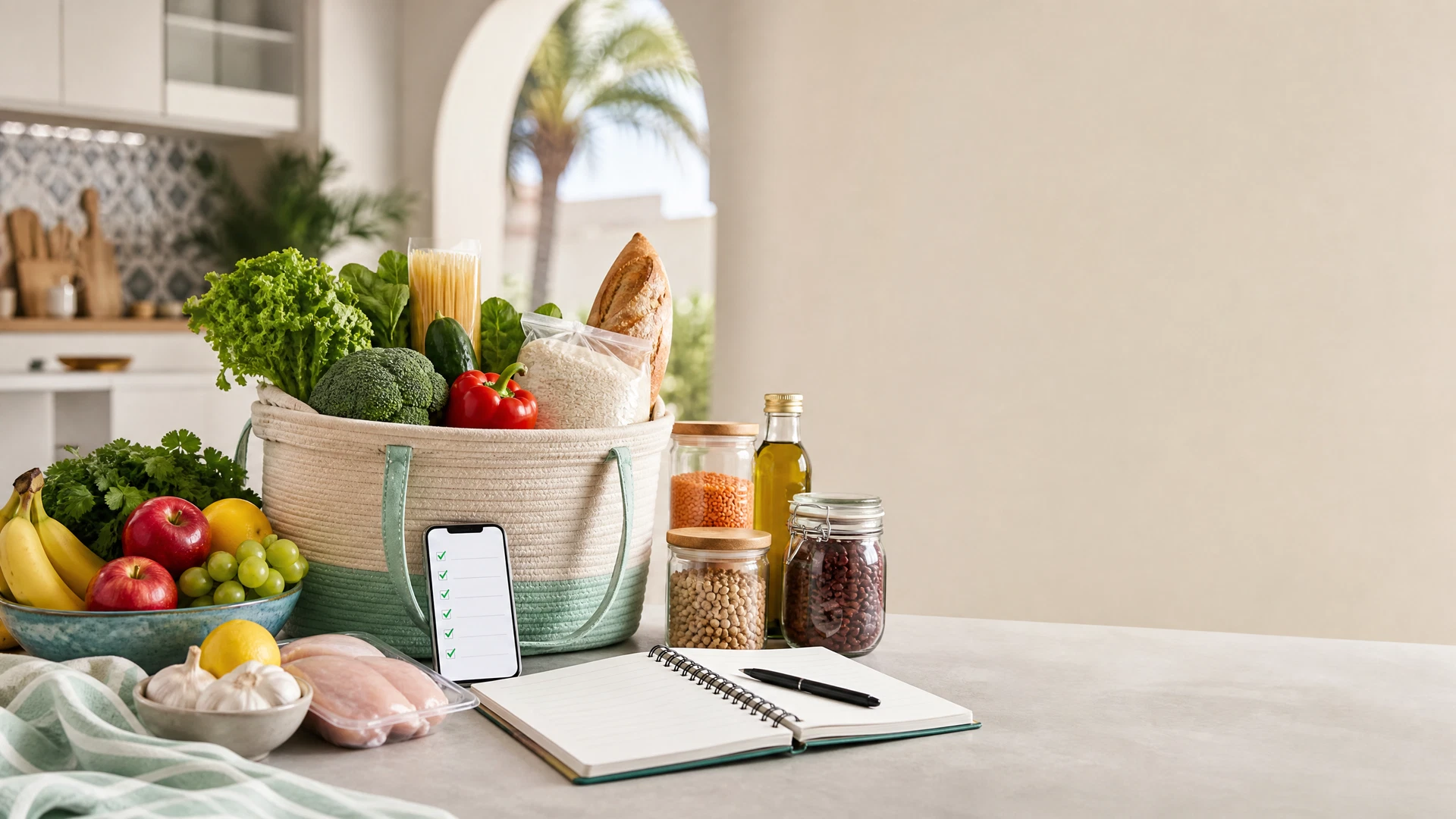
وفّر المال في البقالة بالإمارات: 10 نصائح ذكية 2026
قد ترتفع فاتورة البقالة في الإمارات بسرعة أكبر مما نتوقع. تدخل المتجر لشراء الحليب والخبز والخضار، ثم تخرج بعربة تتجاوز ميزانيتك. الحل ليس بالضرورة شراء طعام أقل، بل التخطيط لما تحتاجه وتقليل الهدر ومقارنة الخيارات والتحقق من وجود كود مناسب قبل الدفع.
إليك عشر طرق عملية لتقليل فاتورة البقالة مع الحفاظ على وجبات المنزل منظمة في 2026.
1. لا تتسوّق من دون قائمة بقالة
من أسهل طرق الإنفاق الزائد التسوق من دون معرفة ما لديك في المنزل. قبل الطلب عبر الإنترنت أو الذهاب إلى المتجر، راجع الثلاجة والمجمّد والمخزن ومواد التنظيف والفواكه والخضار وأغراض الإفطار ووجبات الأطفال الخفيفة والمشروبات. ثم أنشئ قائمة واحدة كاملة.
إذا كان أكثر من شخص في المنزل يراجع النواقص، استخدم قائمة Smart Grocery المجانية من SocialDeals. اختر المنتجات وأنشئ القائمة ثم شاركها عبر واتساب ليعمل الجميع وفق الخطة نفسها.
2. خطط لخمس وجبات عشاء قبل التسوق
لا تبدأ بسؤال «ماذا أشتري من البقالة؟». ابدأ بسؤال «ماذا سنتناول هذا الأسبوع؟». خطة بسيطة مثل دجاج مشوي مع أرز، باستا بالخضار، سمك مع بطاطس، لفائف دجاج وبرغر منزلي توضح لك المكونات التي تحتاجها فعلاً.
هذا يقلل المشتريات المكررة وقد يساعد على تجنب طلبات التوصيل المكلفة في اللحظة الأخيرة.
3. خصص عشاءً أسبوعياً لاستخدام ما لديك
مرة كل أسبوع، حضّر العشاء من المكونات الموجودة في المطبخ بدلاً من شراء المزيد. يمكن تحويل الدجاج المتبقي إلى لفائف، والخضار التي تحتاج إلى استخدام إلى شوربة أو كاري أو طبق مقلي، والأرز المتبقي إلى أرز مقلي، والموز الناضج إلى عصير أو فطائر.
4. لا تشترِ العبوة الأكبر تلقائياً
عبارة «حجم عائلي» لا تعني دائماً قيمة أفضل. قارن السعر لكل كيلوغرام أو لتر أو قطعة أو 100 غرام. قد يناسب الشراء بالجملة الأرز والماء والمناديل والمعكرونة والمنظفات التي تستخدمها الأسرة باستمرار، لكن الطعام سريع التلف ليس توفيراً إذا انتهى جزء منه في سلة المهملات.
5. ضع خطة للمجمّد
يمكن للمجمّد أن يساعد في حماية ميزانية البقالة. جمّد الأطعمة المناسبة قبل أن تتلف، مثل الخبز واللحوم والدجاج وبعض الوجبات المطبوخة والأعشاب المقطعة والصلصات والبقايا. ويمكنك أيضاً طهي حصتين من الوجبات المناسبة للتجميد؛ جلسة طبخ واحدة قد توفر عشاءين.
6. أنشئ قائمة «لا تشترِ»
قبل التسوق، حدد المنتجات التي لديك منها كمية كبيرة، مثل المعكرونة أو الأرز أو الدجاج المجمّد أو الكاتشب أو الحبوب. من السهل شراء المنتجات المألوفة تلقائياً حتى لو كانت موجودة في آخر الخزانة.
7. اختر مكونات تصلح لوجبات متعددة
سلة البقالة الذكية ليست رخيصة فقط، بل مرنة أيضاً. يمكن للدجاج أن يصبح دجاجاً مشوياً أو باستا أو سلطة أو لفائف أو كاري أو شطائر. ويمكن للبطاطس أن تصبح مهروساً أو بطاطس مقلية أو مشوية أو شوربة أو وجبة إفطار. كلما زادت الوجبات التي يمكنك إعدادها من المكونات نفسها قل احتمال الهدر.
8. تحقق من كود الخصم قبل الدفع
بعد مقارنة المنتجات وإضافة المشتريات إلى السلة، خذ نصف دقيقة قبل الدفع للتحقق من وجود عرض مؤهل. يمكن للتوفير البسيط المتكرر في طلبات المنزل أن يتراكم بمرور الوقت.
أكواد للغذاء والبقالة يمكن التحقق منها
- نون — ISJL: راجع أحدث تفاصيل كود خصم نون وتحقق من الأهلية عند الدفع.
- Spring Feeling — WETHRIFT: أضف الكود قبل إتمام الطلب وراجع العرض النهائي عند الدفع.
- Delicut — DE68: أدخل الكود عند الدفع وتحقق من الخصم والشروط المطبقة.
قد تتغير العروض والحد الأدنى للشراء والاستثناءات والأهلية؛ لذا اعتمد دائماً على العرض النهائي الذي يظهر لك عند إتمام الدفع.
9. احسب التكلفة الحقيقية للراحة
قد توفر الفواكه المقطعة والوجبات المغلفة والمكونات الجاهزة الوقت، لكن للراحة سعراً. قارن بين البطيخ الكامل والبطيخ المقطع، أو الخضار الكاملة والخضار المقطعة، أو علبة الزبادي الكبيرة والعبوات الفردية. دفع مبلغ أعلى قد يكون مناسباً عندما يوفر وقتاً مهماً، لكن المهم أن يكون القرار واعياً.
10. جرّب تحدي 50 درهماً
خذ سلة التسوق الأسبوعية المعتادة وحاول خفضها بمقدار 50 درهماً من دون حذف أي شيء أساسي. قد توفر 10 دراهم بكود، و12 درهماً بتبديل العلامة، و8 دراهم بإزالة المكرر، و10 دراهم باختيار عبوة أفضل قيمة، و10 دراهم بتخطيط عشاء من البقايا. تكرار ذلك أربع مرات شهرياً قد يوفر نحو 200 درهم من ميزانية المنزل.
روتين البقالة في خمس دقائق
- راجع الثلاجة.
- راجع المخزن.
- حدد الوجبات الرئيسية.
- أنشئ قائمة Smart Grocery.
- قارن الأسعار وأزل المكرر.
- تحقق من كود مؤهل قبل الدفع.
قبل شراء الطعام اسأل نفسك: هل لدينا هذا بالفعل؟ هل سنأكله فعلاً؟ وهل يوجد كود قبل الدفع؟ هذه القرارات الصغيرة قد تصنع فرقاً ملموساً في فاتورة البقالة.
استخدم Smart Grocery لإنشاء قائمة منزلية ومشاركتها، أو تصفح أحدث أكواد الخصم في الإمارات قبل طلبك التالي.